
Covid isn’t over, Baltimore

How Baltimore’s supposedly progressive news outlet keeps taking a reactionary stance on Covid

Readers, it’s been a while since I’ve written about Baltimore corruption on this site. Since leaving Baltimore to be with family in Florida, I’ve mostly shifted to writing about topics of national interest, especially around disability. Still, I’ve kept one eye on local events and reporting, which brings me to my concern today.
Covid isn’t over, Baltimore. You might have that misconception if you get your health information from certain local news outlets, including the city’s most ostensibly progressive outlet, the Baltimore Beat.
I’m aware that many of you, who subscribed to The Suiter Files for police and political reporting, may need convincing that Covid is still a real concern. So for you, I have an addendum at the bottom of this article with some information and insights into the state of Covid in 2026. Read that first, if you need convincing.
I’ve looked into how Baltimore local media outlets report about Covid, with some surprising and not surprising results. It’s probably not a surprise that a keyword search for “Covid” in the conservative Baltimore Sun returns the expected pile of articles that interrogate Covid vaccines and Fauci, most of them reprinted from newswires or The Epoch Times. The Sun was bought in 2024 by David Smith, who is from the same family that owns the right-wing Sinclair network. The Sun has also published a few articles that describe Covid in the past tense, using language like “post-Covid.”
However, the Baltimore Sun these days is a complicated collection of low-depth articles. Alongside the articles described above, the Sun also provides information for its readers about summer and fall Covid surges, new medications available to treat Covid, and helpful articles on vaccinations. The Sun’s confusion on where to stand on Covid mirrors a lot of national outlets.
The more liberal/centrist Baltimore Banner, which launched in 2022 in response to the Sun’s fall from grace, has been consistent in acknowledging that Covid is still a present concern. Recent articles reinforce the importance of vaccine access during Covid surges and developments in a possible nasal spray to block Covid. A 2023 article highlighted Long Covid. Recently, the outlet reported supportively on people protesting a mask ban at a local grocery store and has elsewhere amplified why people still mask in 2026.
The Banner’s health reporter, Meredith Cohn, has paid more attention to Covid than anyone else reporting in Baltimore’s major outlets. Based on my research, the Banner has only used language like “post-pandemic” once, and that article wasn’t written by Cohn. I’ve elsewhere written critically about the Banner and its failure to live up to its nonprofit, community-oriented promises. But on Covid, it’s far better than most.

Further to the political left than the Banner is the independent, Black-led Baltimore Beat, which one might expect to be even stronger on Covid. The news outlet cites marginalized groups (including disabled people) in its mission statement. It prints articles that are more critical of power than other local outlets.
Unfortunately, in terms of Covid, the Baltimore Beat is more often reactionary than not, and I have at least one guess as to why.
By way of background, the Beat initially launched in 2017 and then shut down a couple of times until it relaunched in 2022. It has stayed in operation since. It was co-founded and is led by Lisa Snowden, now CEO and previously long-time Editor-in-Chief. Early in the pandemic, Snowden was vocally strong on Covid on Twitter, confronting minimizers and challenging local leaders on their abandonment of protections. (Her previous account, @lisamccray, has since been deleted.) On her updated account (@lisaesnowden), she remained vocal about Covid being harmful through early 2025, but her outlet mostly sang a different tune.
When Snowden relaunched the Beat in fall 2022, the outlet hosted a karaoke fundraising event during what was the second worst Covid surge of the pandemic. At that time, there were political leaders and businesses pushing “back to normal,” but the political left was still generally being cautious, so the event came as a surprise to many disabled and Covid cautious people in Baltimore.

Soon after its 2022 relaunch, the Beat started framing Covid in the past tense in some articles. In 2023, the Beat published two articles that referred to the world as “post-Covid”——not even “post-pandemic” which would also be wrong but at least somewhat understandable. It is extremely wishful thinking to imagine that Covid itself no longer exists. Even the Trump administration acknowledges that we are not “post-Covid.” (My own father just tested positive this week, and I started a new drug, Xocova, aimed at preventing Covid post-exposure.)
As a one-time writer for and supporter of the Beat, I and a few others felt a responsibility to speak up about the karaoke event and Covid-minimizing language, but we were mostly ignored and even blocked by Beat leadership. (The Arts Editor blocked us when we asked on Twitter for accessibility information to be included in the calendar.)
In January 2024, I posted on Twitter about the Beat’s repeated use of “post-Covid” and similar framing, given its promised commitment to disabled people.
Snowden replied publicly: “We do not refer to the pandemic in the past tense." She pointed to an example of the outlet taking Covid seriously, a 2023 end-of-the-year wrap-up article: “As much as we wish it were true, we are not post-Covid,” it stated. On Twitter, Snowden framed the erroneous examples of the Beat using past-tense language for Covid as an oversight, and promised that there the Beat had "more things coming down the pike," so I moved on. I chalked it up to a small, underfunded outlet working with freelancers, and I hoped that I and others in that conversation were heard.
Briefly, it seemed like the outlet was doing better, acknowledging an “ongoing pandemic.”
Unfortunately, the “post-Covid” language was never changed, a correction was never offered, and the Beat kept reporting that Covid was in the past tense in articles and interviews. For a bi-weekly publication, with a small staff and limited slate of articles, the outlet has promoted “post-Covid” logic rather a lot.
There have been some exceptions, as noted. A great 2022 article on how Covid spread in jails and prisons, referred to Covid as “a disease that has and continues to be fatal.” But these exceptions are outnumbered by articles that define Covid as in the past, and the problem has gotten worse lately. A 2025 end-of-the-year wrap up explicitly used “post-Covid” language again, with several articles in 2026 doing similar. It’s hard to believe that all of these choices can be oversights, especially after multiple call-outs over years.
I’ve reached out to the Beat and Snowden many times on this subject. In December 2025, I sent Snowden an email pointing out the factual inaccuracy of “post-Covid” in their end-of-year article. She has not responded since her public promise in January 2024 that her outlet does not use such language.
Meanwhile, the Beat has a section for health reporting that has never directly covered Covid or Long Covid, the most important health stories since the outlet’s founding by any measure—and of special importance to the marginalized groups the Beat claims to represent. “Harm reduction” is language that appears in many of the Beat’s health articles. Covid would be a great subject to cover from a harm reduction standpoint.
So why is the Beat taking this stance on Covid, more often than not, when Snowden herself seemed to know better? For all of the media criticism I have written in the last decade, I can never say for sure what’s in the minds and hearts of unaccountable editors. It’s certainly more profitable to say that Covid is in the past. It aligns with government and business interests, and it’s a popular idea among people who don’t have medical vulnerabilities (and some who do).
One strong guess is that the Beat’s brand has become very much aligned with the cultural life of Baltimore, including clubs, parties, arts events, and activism. It would certainly complicate its reporting to admit that such activities might be hazardous. Indeed, several times, the outlet has discussed Covid in terms of how lockdowns negatively impacted cultural life, with no reflection on the necessary protection of life and health. The Beat has created a fantasy world in which participating in Baltimore’s cultural life is an unquestionable positive, with no risks. It’s the same kind of liberal utopianism Biden’s administration promised when it told everyone to get back to normal.
Snowden’s pivot was surprising, but otherwise it’s not that surprising to see leftist media minimizing Covid. There’s an “aesthetic left,” if you will, defined by how it expects people to show up collectively in terms of community life and activism. This aesthetic left can be resistant to radical inclusivity and accommodations around disability. I’ve written about the ableist and aesthetic left before.
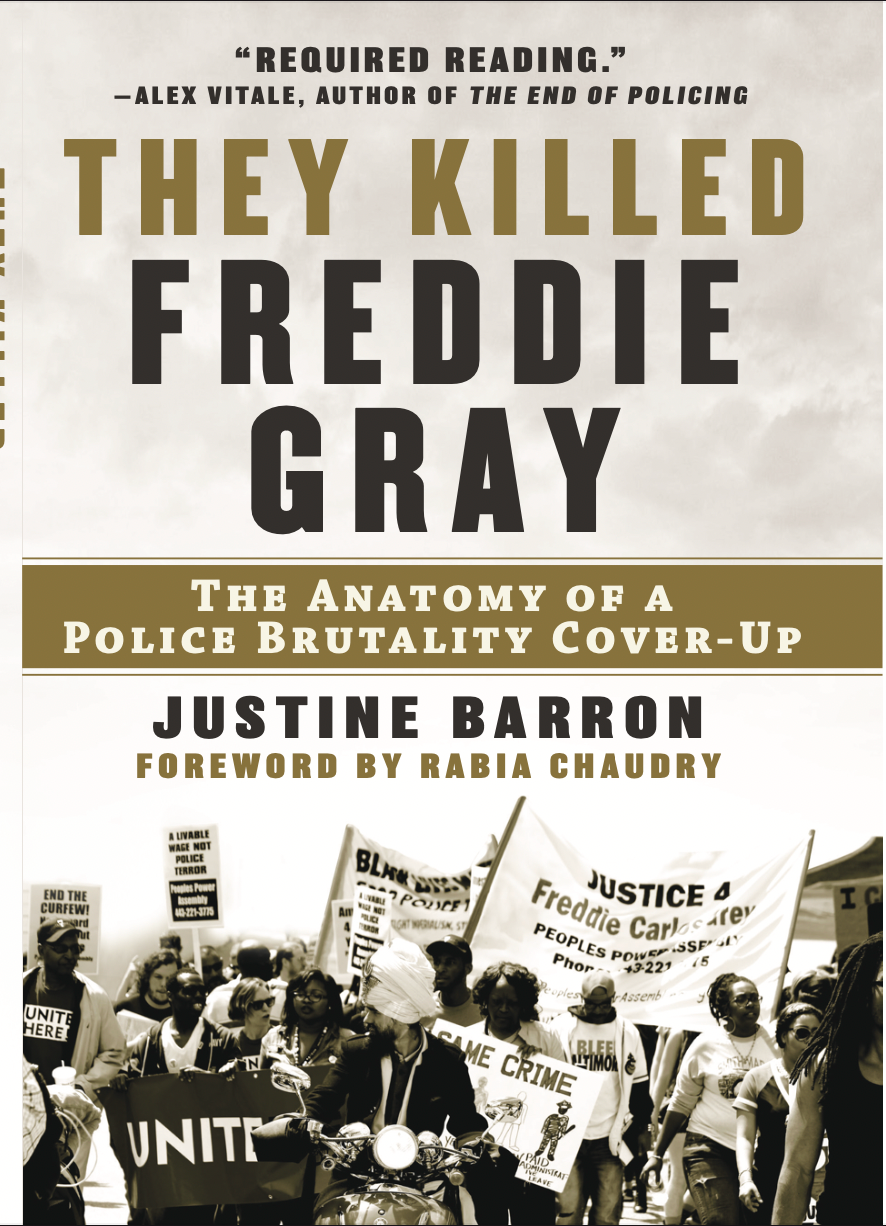
As a critic of Baltimore media for many years (including in my book, which has a chapter on the media’s failed coverage of Freddie Gray’s death), I was excited when the Beat launched. I was eager to write and volunteer for the outlet. And I was excited when Snowden was in charge, since she was an outspoken and thoughtful media critic. Baltimore’s former alternative news outlet, the City Paper, was led almost entirely by white men, and its reporting very much reflected that.
It does make me uncomfortable to be the one to keep calling out the Beat on its Covid framing. I have faced a few accusations of racism for it, and I generally do believe in white people staying out of the business of conversations within the Black community. But it does seem like someone should say something, given the harm perpetuated by amplifying “post-Covid"! I would really love someone else to take up this cause.
The Beat has the trust of a lot of Baltimore’s marginalized and activist communities. It reports from the perspective of marginalized people. So when it continually emphasizes that Covid is over (also in at least one Spanish-language article), it is influencing those most at risk of Long Covid and death to relax any precautions and participate in public life unprotected. It is even suggesting that vaccination wouldn’t matter. We are “post-Covid,” after all.
Addendum: A Case for Covid Being a Persistent Threat

The government doesn't collect good data on Covid tests, deaths, or hospitalizations anymore, but there is one objective measure of Covid spread, namely wastewater data. Wastewater sites measure the actual rate of infection as it shows up in our collective poop. You can’t wish away wastewater data through positive thinking or minimizing rhetoric. The closest sites to Baltimore all show high levels of SARS-2 in wastewater this September. Nationally, we are currently at our highest peak this year, even higher than in January.
A lot of you may be willing to accept that Covid is in high circulation but no longer believe it’s a serious threat, any more than the common cold. Briefly, I want to discuss why you might feel that way:
In April 2023, President Biden ended what was known as the Covid-19 “emergency,” which stopped the free testing and tracing infrastructure. Other governments around the world were doing the same. Many people took this to believe we were no longer in a pandemic. Yet, according to experts, Covid still very much meets the criteria for a pandemic, defined by having a wide geographic reach across countries and affecting a significant percentage of the population.
There is evidence that, behind the scenes in 2022, Democratic party leaders faced pressure from corporate interests and consultants, eager to restore the economy and declare a “win” for Biden. The decision to end the Covid emergency was political, not based on science.
By 2023, there was sufficient data to suggest that most people who died or faced serious acute illness from Covid had pre-existing conditions or other vulnerabilities. This led the Biden administration to adopt a public strategy of a) actively marginalizing these people, making us seem like necessary sacrifices; and b) insisting that vaccination would give most people good enough reason to relax and stop masking. Yet, Covid vaccines were never neutralizing like traditional vaccines; they don’t block transmission. For healthy people, they minimize the risk of death or acute illness, but they do little to prevent Long Covid. I’ve written elsewhere about how some of the champions of Biden’s effort to minimize Covid (especially women) ended up chronically sick from Covid and/or have since backtracked from their previous “vax-and-relax” views.
Many people believe Covid is no longer a concern because people don’t seem to be dying of the virus at anywhere near the same rates as early in the pandemic. This has led to the popular misconception that current strains are milder. There are two better explanations for what happened:
The first few strains of Covid wiped out so many vulnerable people, especially the elderly, that those people simply are no longer here anymore to die again.
We don’t know how many people are dying of Covid now, because hospitals used to be required to test patients and track cases. If you haven’t noticed, we hear all of the time about the mysterious celebrity deaths from infections. Also, Covid causes other opportunistic infections, like sepsis, that get named as causes of death.
Covid is more likely to harm you today through the development of chronic medical conditions that can also be deadly. Long Covid is the hidden explanation behind the rise, in the last few years, in sudden heart attacks, strokes, and even cancers in young people. It commonly happens even after a mild infection, so many people don’t even realize that their infection was the source of their new chronic illnesses. Numerous studies show that Long Covid occurs in 5-30% of Covid cases, leaving millions of people unable to work or function. It is currently the number one chronic illness in children, surpassing asthma. It affects women and minority groups at much higher rates than others
In some ways, Covid presents more of a risk now than ever because: 1) most people don’t vaccinate, mask, or distance, even when sick; and 2) it has already caused mass weakening of our collective immune systems. The reason everyone seems sick all the time these days is because Covid has made people more susceptible to all sorts of infections, including the next Covid infection.
If you’re still not convinced that Covid is a persistent threat, there are others who have written about this in more detail. I strongly recommend Julia Doubleday’s “The Gauntlet,” where she also explains why and how Covid is a labor issue—in other words, why the left should care.


Comments